In this article
Organize a chargeback response as a dated claim-and-evidence record, with the actual deadline and an accountable reviewer.
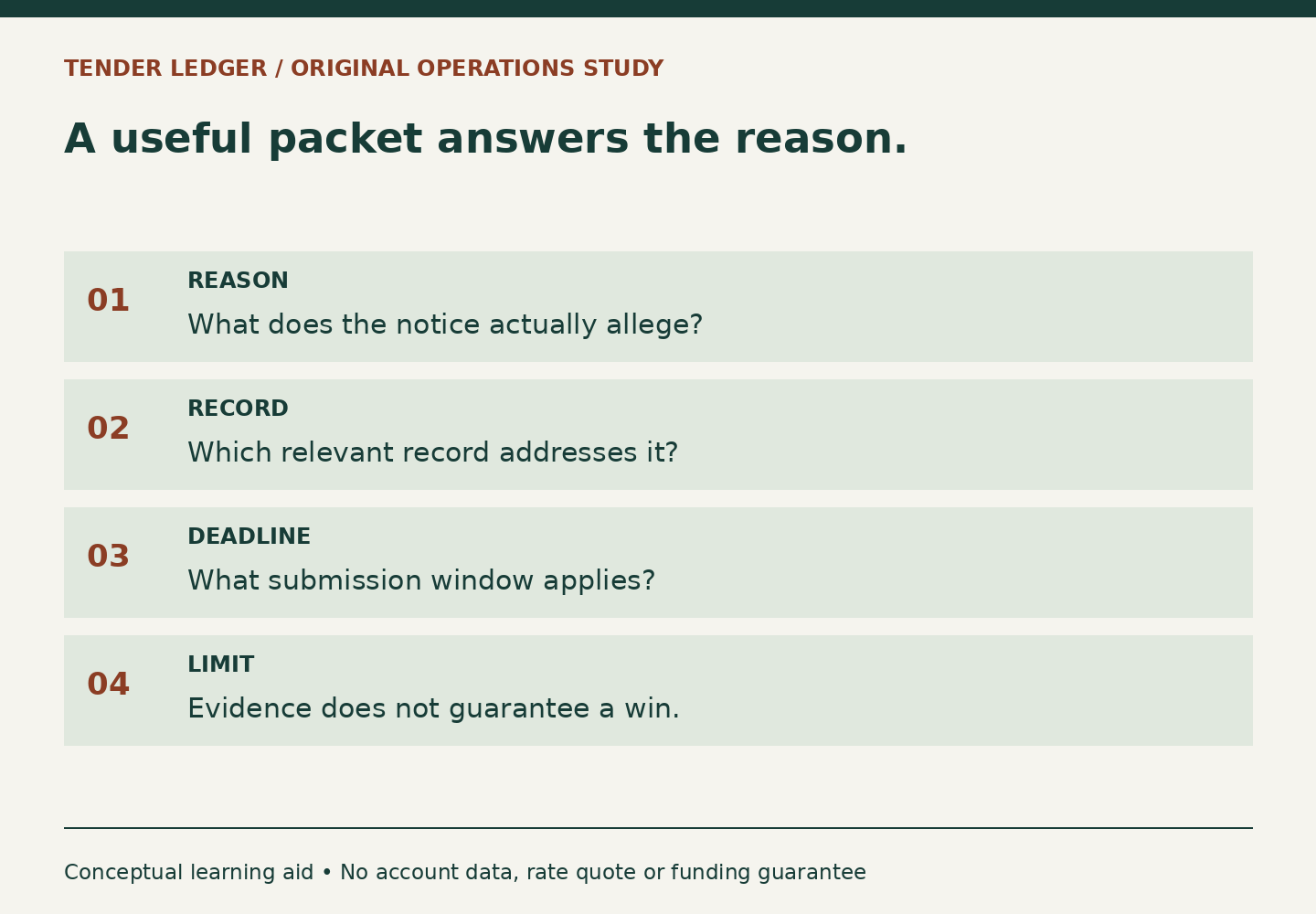
A large folder of screenshots is not automatically a useful dispute response. The reviewer needs to understand what is disputed, what the business can establish and which record supports each point. Begin with the reason stated in the case and the actual response deadline. Then assemble relevant evidence in a sequence someone unfamiliar with the sale can follow.
Record the case boundary
Helcim’s chargeback dashboard guide identifies the case ID, reason, disputed amount and Respond By deadline. It warns that a missed deadline leads to acceptance and describes saving a draft before submission. Its evidence guide says the response should be complete when submitted. Verify the instructions in the actual case; neither this article nor a training example extends a deadline or guarantees an outcome.
Assign an owner and an internal review time before the external deadline. The internal time should leave room to locate missing evidence and resolve contradictions. It is a coordination choice, not a new deadline imposed by the processor. A task labeled “chargeback, urgent” without the case reference, amount and date is difficult to hand off safely.
Match evidence to the question
In a fictional case, a customer disputes $210 because a parcel was not received. The merchant has an invoice, a carrier label and a delivery event. These records establish different things. The invoice identifies what was billed. A label shows a shipment was prepared. A delivery event may add information about delivery, depending on its details. The reviewer should not describe all three as interchangeable proof of receipt.
Build a short evidence map: the disputed proposition, the supporting record, its date and what it actually shows. If the delivery event concerns a different tracking number, it does not support this order. If an address changed, preserve the documented sequence. Do not silently edit a record so the pieces look more consistent.
Now vary the reason: the dispute concerns a promised refund rather than non-delivery. The delivery record may be background, while the return request, agreed refund terms and refund transaction become central. Reusing the same generic packet for every case can bury the relevant evidence under unrelated material.
Use a concise chronology
- Identify the original order and payment.
- State the relevant fulfillment or service events.
- Record the customer’s concern and the business’s response.
- Identify any refund, credit or other adjustment.
- Explain how the attached records address the stated reason.
Use factual language and distinguish an observation from an inference. “The carrier record lists a delivery event on this date” is narrower than “the customer definitely received it.” Do not invent intent, accuse the customer of fraud without evidence or add unrelated personal information. Preserve originals in the authorized business system and prepare the response according to the case’s requirements.
Review before submitting
Check that the case ID, amount and currency agree across the response. Open every attachment to confirm it is readable and belongs to the correct customer and order. Confirm that any necessary redaction does not remove the very detail needed to connect the record to the case. Use the authorized processor workflow, not a public upload form or this publication, to transmit private evidence.
After submission, verify the recorded status and retain the submission reference. Helcim distinguishes a received response from later review progress; an uploaded file is not a favorable decision. Track the actual case until the responsible person has an outcome, and reconcile any resulting financial movement separately.
Some cases involve substantial legal or contractual consequences. Escalate those decisions to the appropriate qualified person. The skill taught here is evidence organization: make the relevant facts easy to review while remaining honest about what each record can and cannot establish.